Comparison
Outer Banks and Daytona Beach Driving in a Wrangler or Gladiator
Which Jeep suits sand: Wrangler, Gladiator, Grand Cherokee or electric Recon. Clearance, 4x4 hardware, gearing, recovery gear and how to rinse off the salt.
By the Southeast CDJR editors · Updated November 7, 2026 · 5 min read
Few places in the country let ordinary vehicles roll onto the sand the way the Southeast does. The 4x4 stretch north of Corolla on the Outer Banks, the beaches of Cape Hatteras National Seashore and the hard-packed shoreline at Daytona Beach and New Smyrna Beach all draw drivers who want to park beside the water. Sand is a harder surface than it looks, though, and salt is harder on a vehicle than the sand is. Here is how four Jeep models compare for it.
Rules, permits, fees, hours and seasonal closures differ by park, county and beach, and they change. Check the National Park Service, the county or the city before you go. Nothing here replaces those official sources.
What sand asks of a vehicle
Soft sand rewards three things: low tire pressure, steady momentum and enough power at low speed. It punishes weight, low ground clearance and drivers who stop on a slope. The 4x4 system matters, but traction on sand often comes down to how much of the tire touches the surface, which is why drivers let air out of the tires to widen the footprint.
Exact pressures depend on the tire, the load and the sand, so follow your owner's manual and the guidance posted by the park or beach. Carry a gauge and a compressor to reinflate before you return to pavement. Driving highway speeds on soft tires is a good way to damage them.
Wrangler: the default choice
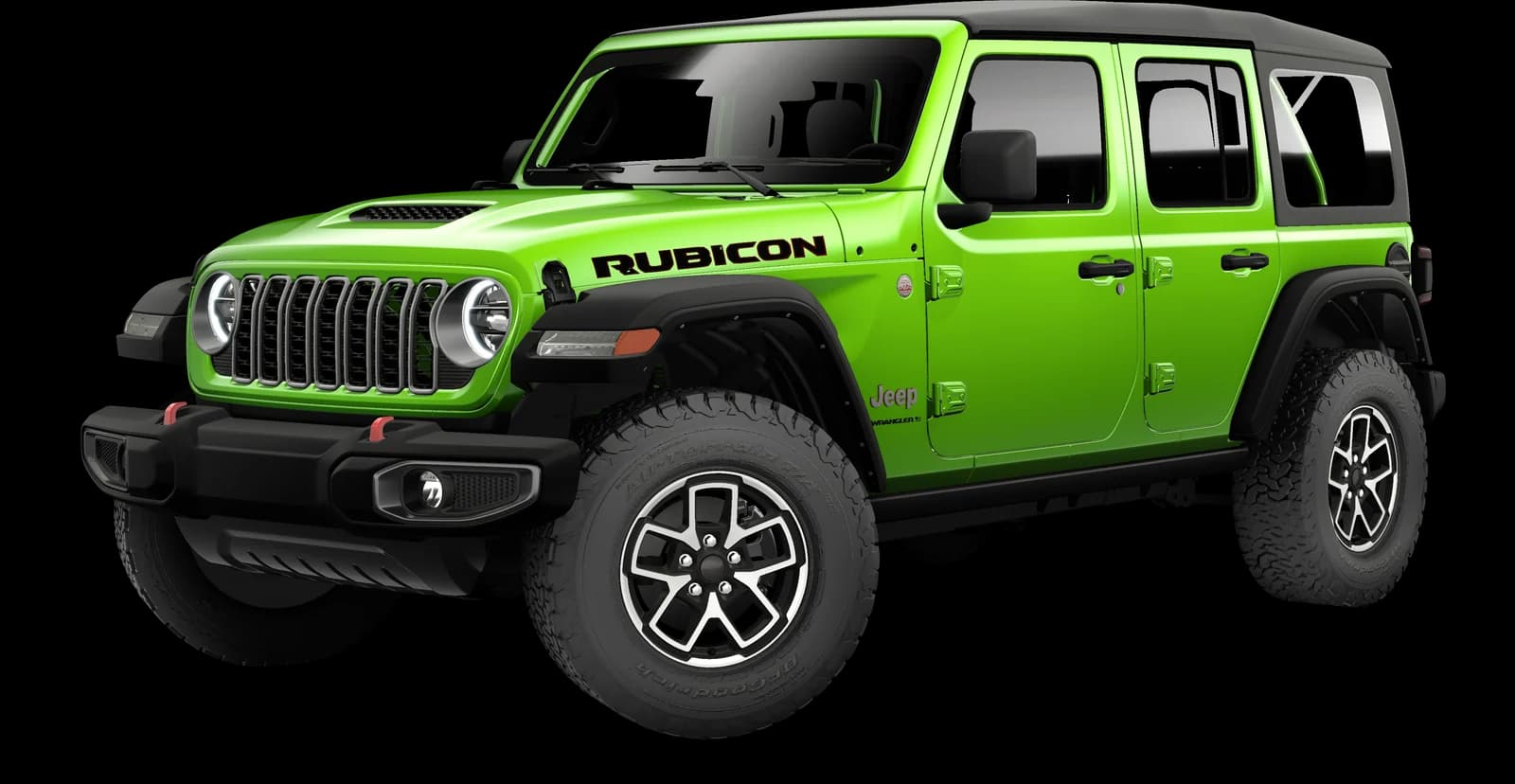
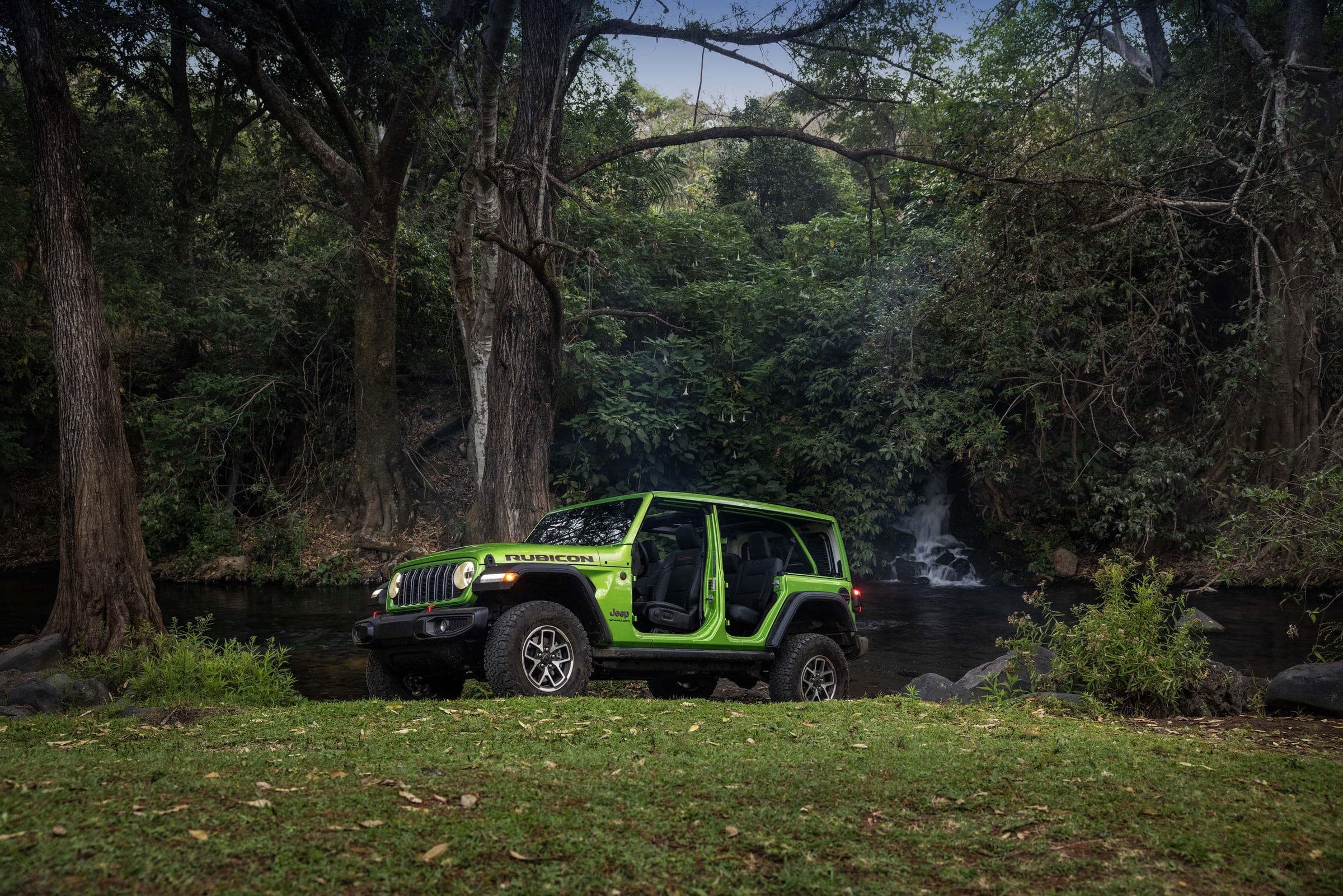
Jeep's solid-axle SUV has the hardware beach drivers want. Wrangler ground clearance runs from 9.7 inches on the Sport to 12.9 inches on a four-door Rubicon with the largest tires. Approach angles run from 41.4 to 47.4 degrees, which helps when you climb the soft ramps cut into dunes at beach access points.
Every trim has 4x4. The Sport and Sport S use the part-time 2.72:1 Command-Trac system, while Rubicon models use Rock-Trac with 4.0:1 low range and locking front and rear differentials. Jeep lists the Rubicon's crawl ratio at up to 100:1 when properly equipped, though that is mostly relevant for slow rocks rather than sand. What matters on a beach is simpler: low range for getting unstuck and the option of lockers if you drive into deeper ruts.
Powertrains are the 2.0-liter turbo four at 270 hp and 295 lb-ft, the 3.6-liter V6 at 285 hp and the 6.4-liter V8 at 470 hp. Fuel tanks are 17.5 gallons on the two-door and 21.5 on the four-door, so the four-door is the more practical choice for a long day on the sand, with fuel stations often far away from the beach access points. Fuel economy is modest, with EPA ratings of 17/22 on the V6 and 13/16 on the V8.
Prices start at $36,635 for the two-door Sport and $39,985 for the four-door, with the Rubicon four-door at $51,330, all before destination. Prices change.
Gladiator: more space, longer wheelbase
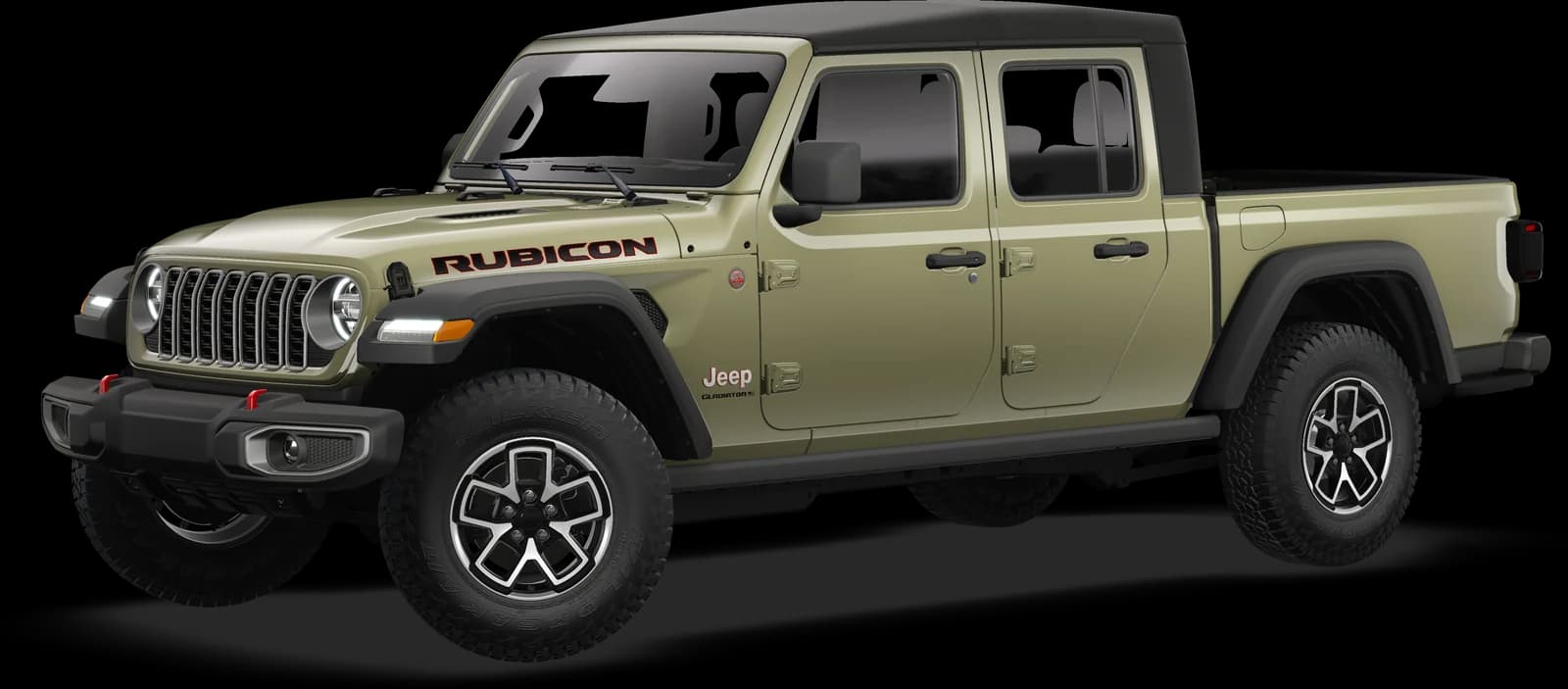
The Gladiator is the Wrangler with a 5-foot bed, and that bed is useful for coolers, chairs and fishing gear. It also has the longer 137.3-inch wheelbase, which makes it a bit more stable on a straight shoreline and a bit less nimble when you turn at an access ramp. Jeep lists a 44.5-foot turning diameter against the four-door Wrangler's 38.8 feet.
Ground clearance runs from 10 inches on the Sport and Willys to 12.9 inches with the 35-inch tire package. Breakover angles of 18.4 to 23.3 degrees are the number to watch: the long wheelbase means the truck can high-center on a sand ridge more easily than a Wrangler will. Jeep's most recent published fording figure is 31.5 inches.
The Gladiator has one engine in 2027, the 285-hp V6 with an eight-speed automatic, and 4x4 comes on every trim. The Mojave is built for fast desert running with a 4.10 axle and an optional Selec-Trac full-time system, which suits long runs on open sand. The Rubicon uses Rock-Trac with 4.0:1 low range. The tank holds 22 gallons. It starts at $43,895 for the Sport S, and the Mojave starts at $56,200.
Grand Cherokee and Recon: capable, with caveats
Neither is a first-choice sand vehicle, but both come up in shopping conversations.
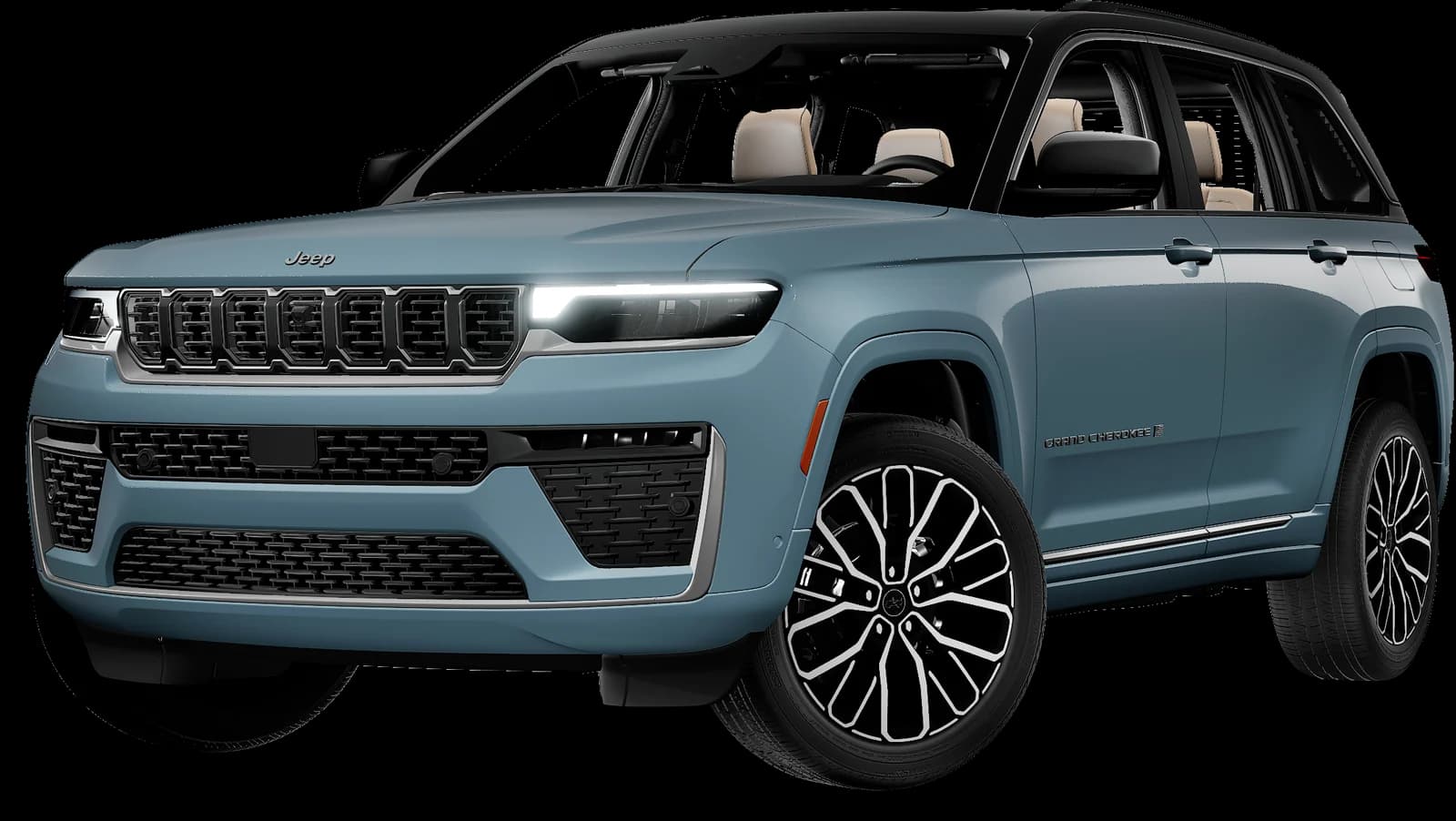
The Grand Cherokee Trailhawk uses Quadra-Drive II 4x4 with a two-speed transfer case and a 2.72:1 low range, plus Quadra-Lift air suspension that raises clearance to 11.4 inches from 8.5 on the standard setup. It has a 36-degree approach angle in the off-road position and a 23-gallon tank. It starts at $53,625 and is the most car-like of the four on pavement. If the same vehicle must handle the drive down I-95 and some sand, it is a defensible choice. Tires and low air pressure matter more here, since the Trailhawk rides on 18-inch all-terrain tires.
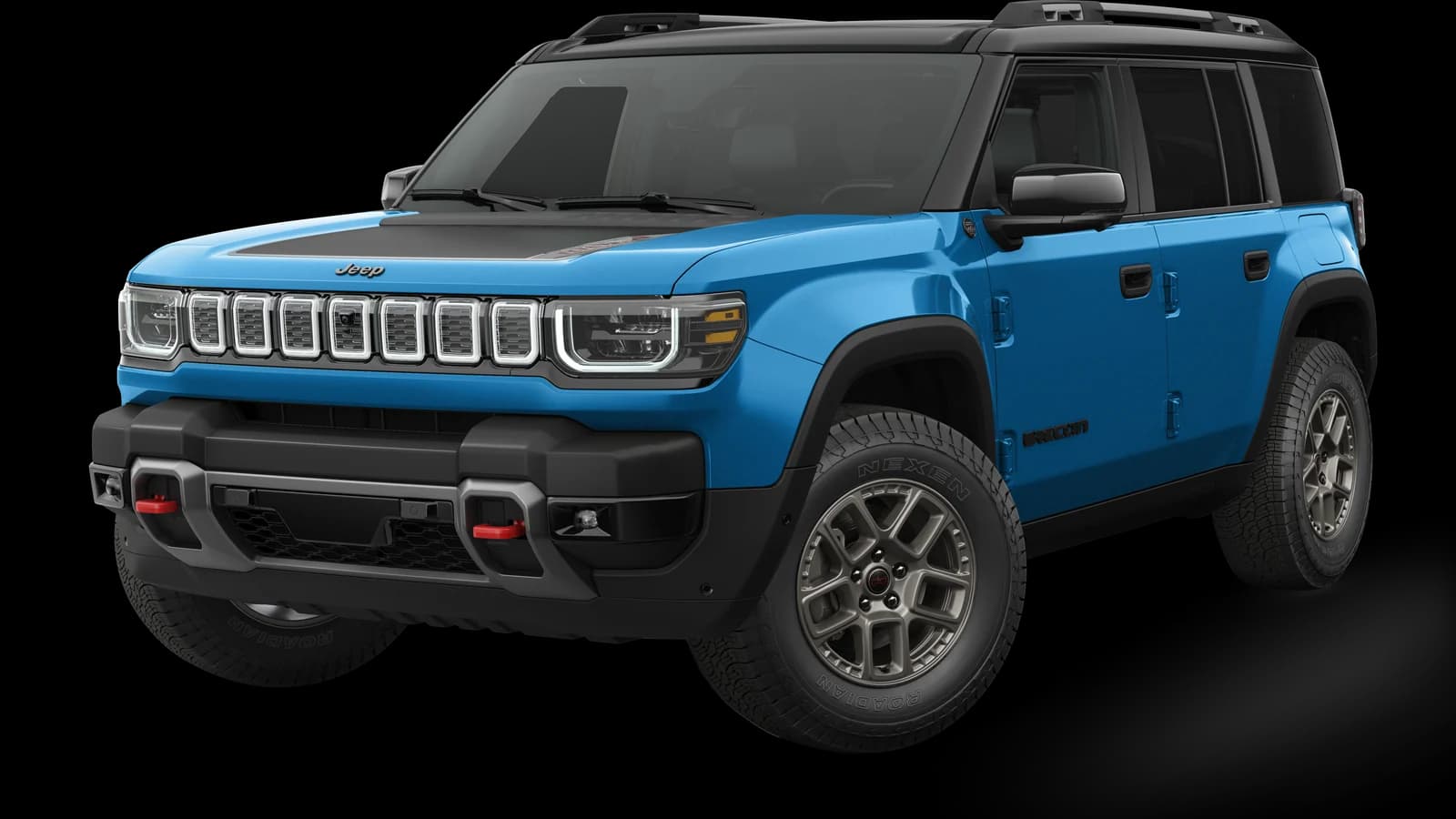
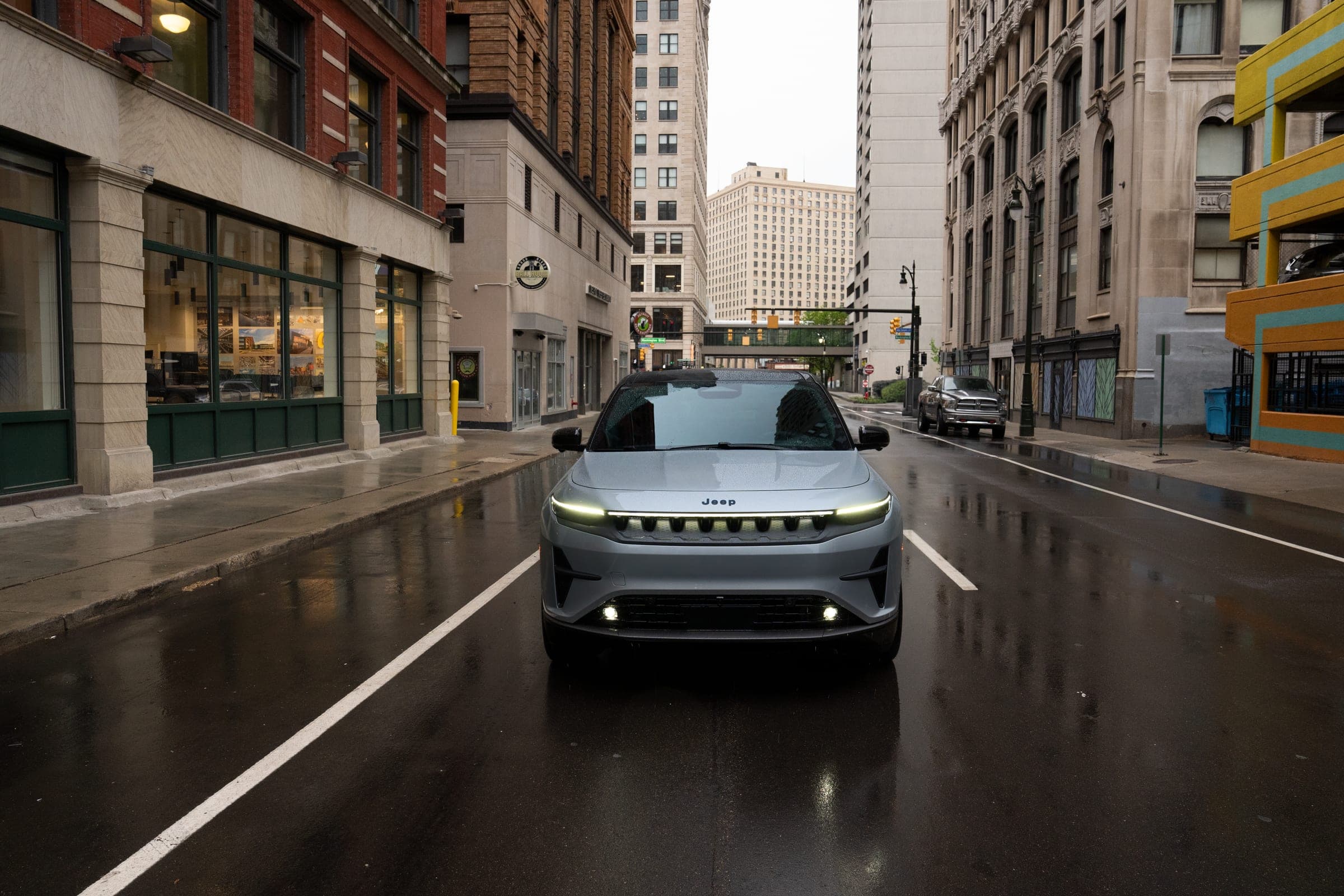
The electric Recon Moab was designed with open-air driving in mind, with doors and rear glass that come off by hand. It has 9.1 inches of ground clearance, 265/70R18 all-terrain tires and a Sand/Mud drive mode, but weighs 6,112 pounds, which is heavy for soft sand. Jeep estimates up to 222 miles of range. Plan your charging before you leave the pavement, because a beach day uses energy and public chargers near barrier-island access points are not guaranteed. Starting price is $66,995.
Recovery gear and salt
Pack a recovery kit before you reach the beach: a shovel, traction boards, a tire gauge, a compressor, a tow strap rated for your vehicle and a plan for tide. The incoming tide is the biggest risk on any Southeast beach, so know the tide table. The Wrangler Sport comes with two front tow hooks and one rear hook, plus skid plates for the fuel tank, transmission and transfer case. A steel bumper is available too: Jeep prices the Steel Bumper Group at $1,495 for Willys, Rubicon and Rubicon X. For the Gladiator, the Mojave Steel Bumper Group is $1,995 with a winch-capable front bumper and rock rails, and the Rubicon Capability Package at $3,495 adds a Warn winch.
Salt corrosion follows every trip. Rinse the underbody, wheel wells, brakes, hitch receiver and door sills with fresh water as soon as you can after leaving the beach. Sand packs into door seams and the area around the rear differential, so open the doors and rinse those spots. Open-air models invite more sand into the cabin, so a set of all-weather mats is worth having.
Which one to pick
If sand and trails are the priority, a four-door Wrangler is the simplest answer. If you want gear space and a cooler in the bed, the Gladiator makes sense. If this is a daily family vehicle that also visits the shore, a Grand Cherokee is the more civilized option. And if you want something different, the Recon is a capable electric alternative, but it asks for more planning on charging and weight. In every case, read the park's rules first and keep a rinse hose close.